Upcycled wood projects of TPS
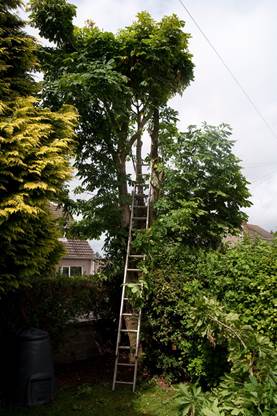
It all started here.
In 1966, Brian Griffiths, a friend and neighbour germinated a conker and planted a baby horse chestnut tree (ladder attached left) in the back garden of our family home in Pembroke, West Wales.
As the years passed, it started to worry mum’s next door neighbours that the roots may damage their foundations. After Brian passed away (cancer of the spine) in 2011, I felled the tree as requested by mum who was still living there.

I wanted to preserve some of it as a memory of Brian who’d won awards for his prolific tree planting around the world. I decided that the best way to do this would be to make as much use of the wood as I possibly could. The local scout group accepted some of the smaller branches for whittling projects and a 2 metre section of the lower trunk was preserved with the intention of making it into picture frames (top right image).

A local sawmill in Pembroke Dock agreed to cut the trunk into 50mm thick planks. On hearing the connection with Brian they refused to take payment for the service.
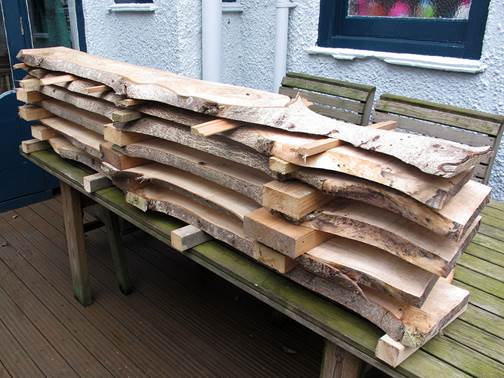
Being freshly cut from a live tree, it took another 2½ years of the planks being left in the bicycle shed in order to dry out sufficiently for further cuts and making into frame carcases.
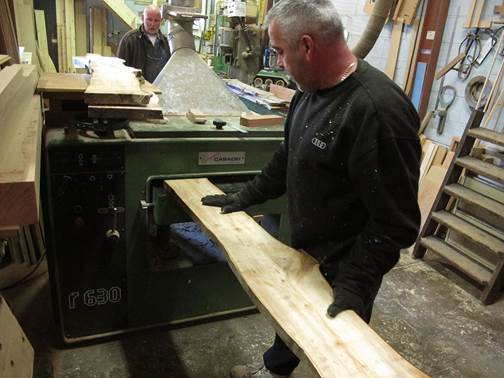
It’s not uncommon for planks to twist and curl as they dry once cut, sometimes with considerable distortion, but although there was some deviation on the original planks this was minimal. Here is one of the planks being fed through an industrial thicknesser (like a big plane) to ensure each plank was true.

I purchased a second-hand table saw to cut the now dry planks into 38mm battens. I didn’t know whether I would repeat this or similar projects. Nor did I know at this point whether it would end up going in the bin if it fell apart or broke on me. This is another time that has the potential for the wood to curve and twist out of true.
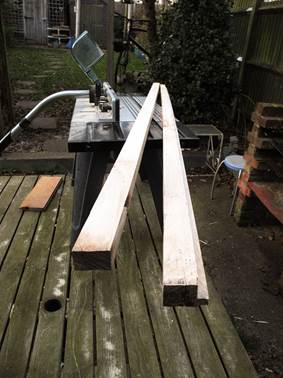
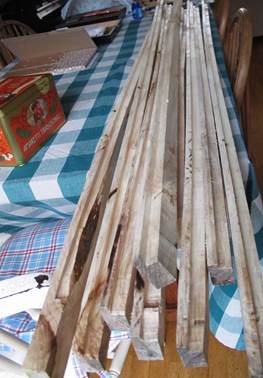
Routing too can affect curvature and a couple of battens did twist a fair bit near the knots, but by carefully cutting each piece either side of twists and distortions I was able to maximise as much wood as possible from the finite stock.
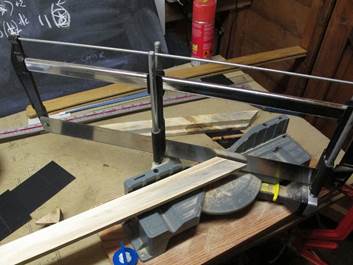
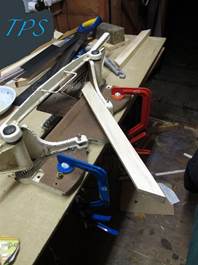
From here on, no new skills were required as I already had a mitre saw & guillotine (pictures previous page) from the frames I had been making since 1998 using pre-made purchased mouldings from suppliers.
Most stock of mount card. mouldings and accessories still come from Lion’s in Birmingham. https://www.lionpic.co.uk/ Cutting mounts for the new bespoke and intensely personal upcycled wood was no different to all the frames I’d made in the past in that respect.

The first six completed frames (pictured above) were completed in time for mum’s 80th birthday in 2013. Each featured a chosen image of Brian for Gwen (Brian’s wife) their three children, one for mum of course whose garden the tree had been in for over 40 years and I made one for myself as well.
Because I used the wood sparingly, there was still enough left to make frames for Len, the joiner and family friend who’d lent me the chain saw to fell the tree, “Posh” Rob who’d arranged for the thicknesser and done the first straight cuts on each plank for me in his workshop in Queens Park and Mark, who’d driven up to Pembroke with me to retrieve the trunk and take it to the sawmill.
The project became a model for how I wanted to do my framing from now on. I still get orders from clients and friends who want lacquered, pre-made mouldings (often MDF cores) but these are very much the exception these days.
When friend and cooperative photographer Richard and his wife Fiona refurbished their kitchen, the former solid oak tongue-in-groove floor was saved from landfill and brought home for the next series of projects (the watering can is there for scale).
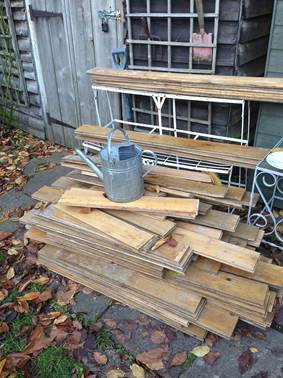
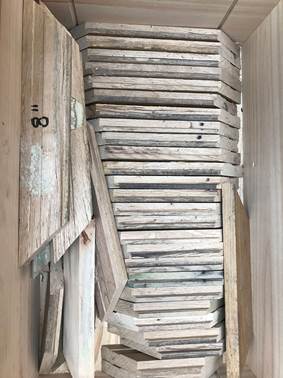
Offcuts of the oak were stored for smaller and smaller projects down to 6” (152mm) square. By again using the wood as sparingly as possible ensuring as little waste was created as practicable, I ended up making over 200 individual frames from an upcycled kitchen floor.
I charged paying customers an additional £10 for each wooden frame carcass completed from this oak, so that I could pass the additional funds raised onto a variety of charities connected to the TPS Cooperative.
The Baileys, who’d donated their former kitchen floor to this particular project, are themselves professional photographers, Richard being the creator of “Shifting Perspectives,” a series of international exhibitions and a most beautiful book of the same name. https://www.shiftingperspectives.org/
Richard and his equally talented wife Fiona are also actively involved with another charity called “I can dance,” their first born Billie-Jo being one of the regular participants in this wonderful organisation. https://icandance.org.uk/
Because of their connection to these related charities and events, a significant proportion of the profits raised for their old kitchen floor were donated to the above as well as The Downs Syndrome Association. https://www.downs-syndrome.org.uk/
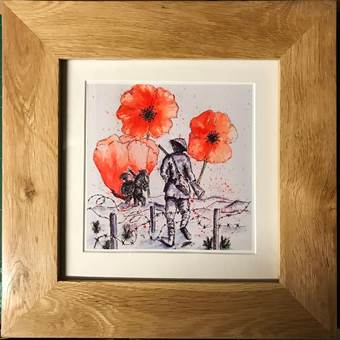
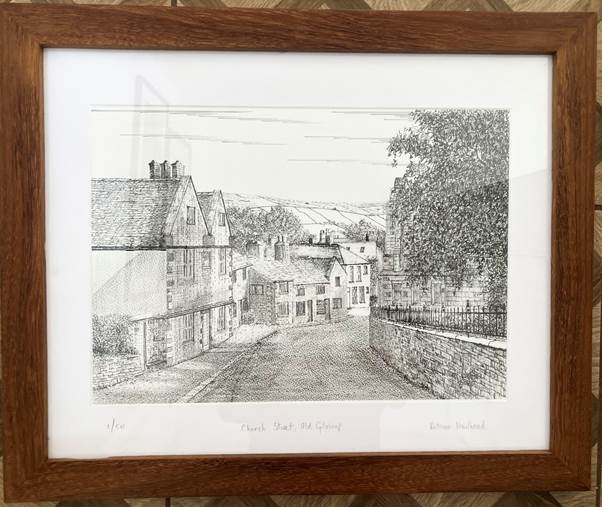
Although the intention was always to frame my own photographic images for clients, I have over the years framed the art and photos of other people on request. The above “Bailey Oak” example is a 4” (100mm) square watercolour from Jenny Shaw’s “Lest we forget” collection and below an A3 print by the artist Bill Westhead of Old Glossop. I’ve done a fair bit of framing for Bill’s work, but this particular one hangs in my living room.

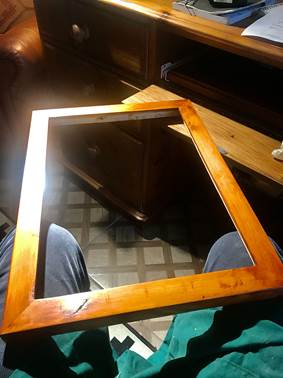
The previous pair of images are before and after shots of a piece of oak washed up on Freshwater East beach in Pembrokeshire. Only two frames were made from this small section of driftwood, but it “scrubbed up” beautifully and made a wonderful surround of a painting for the artist’s octogenarian grandmother on the occasion of her birthday.
At the end of the first COVID-19 lockdown, I moved back up to Derbyshire where four generations of my family now live. The process of furnishing my new home in Hadfield was made easier by purchasing what I needed from the Glossopdale Furniture Project. https://www.glossopdalefurniture.co.uk/
It was a charity I had used to furnish my previous homes when I rented in Simmondley and Shirebrook and I latterly started to volunteer within the charity on the van runs collecting and delivering furniture.
Their workshop, was run by Leigh, now the manager of the Project. It takes commissions of work for upcycling and repairing certain types of furniture. One old folding table I donated in 2020 ended up as a bench as did a selection of wooden headboards collected over several months. Reducing waste is at the forefront of their business model and seeing some of the creative products coming out of the workshop each week is a heart-warming experience for me.
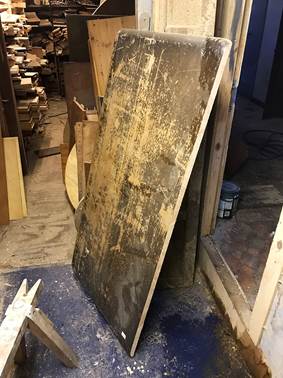
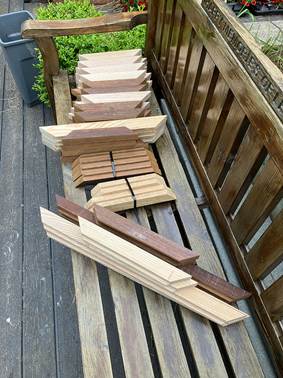
I procured the old oak worktop (left above) in order for Leigh and his team to cut it into battens for me. That, and another piece of battered mahogany from a broken desk were cut and brought home for various framing projects. The routed and mitred carcasses were laid out on the garden bench before being assembled into frames.
The garden seat (right above) is a memorial bench to the Late Len Elvins who donated the chain saw years before when I felled Brian’s horse chestnut. The inscription on the wooden plinth “Happy memories of Len Elvins” was engraved onto one of the pieces of wood he’d given me when he stopped working in his 90’s. The engraving was completed by the company Jack Badger who have now relocated to Old Glossop. https://www.jackbadger.co.uk/ This is another local centre of excellence and the quality of work undertaken there is breathtakingly beautiful.
I continue to try and match the frames for the art and photographic images with wood that has a connecting story. Three old oak shelves thrown out from Glossop’s old library in Victoria Hall were used to frame artwork for Steve Roberts at George Street Bookshop. https://www.georgestreetcommunitybookshop.co.uk/
Other salvaged timber from Victoria Hall has been used by Leigh and the Furniture Project team, some of which was returned to Friends of Victoria Hall. https://fovhglossop.wordpress.com/
Included in the upcycling business model, full time staff and volunteers at the Glossopdale Furniture Project spend hours each week repairing, sanding, painting & waxing donated pieces of furniture that have become worn and dishevelled.
If this 11 pages of local and not-so-local history have motivated you into acquiring something for yourself, the web pages and links were all checked live on 8 January 2025. All of the named organisations, cooperatives and charities can be contacted directly.
For any projects you think I may be able to help with or for pricing, photography and/or frames, please don’t hesitate to get in touch via email, phone or WhatsApp.
A gallery of images is in the link below. For every frame made, a tree is planted in the customer’s name here https://treesforlife.org.uk/groves/272690/
Tim Hoy
Gallery: https://500px.com/timhoy
Tel: 07970 380955
Email: admin@tpsphoto.co.uk
 TPS Cooperative